
Masculinity through a Feminine lens
In today’s filmmaking industry, approximately ninety percent of directors are men. Movie-goers are constantly bombarded with testosterone fueled films driven by hyper-macho leading men performing alongside beautiful petite feminine actresses. Box office blockbusters like Star Trek (J.J. Abrams, 2009) and The Avengers (Joss Whedon, 2012) are filled with colorful explosions and clever one liners from leading men who are faced with obstacles designed to allow them to showcase their intelligence and flex their muscles. The women of these movies are feminine and beautiful and never threaten the masculinity or the authority of the men with whom they share the screen. But the films of female filmmakers like Dorothy Arzner, Ida Lupino, and Agnès Varda focus on characters who symbolize the problematic nature of societal gender roles and those who take the stereotypes associated with these roles and completely turn them on their head.

In her film, Le Bonheur (Agnès Varda, 1965) Agnès Varda subtly criticizes the stereotypical gender roles in relationships and in the home through the film’s main characters, Thérèse and François (and eventually Èmilie). In one of the early scenes of the film, Varda uses a set of disembodied female hands doing chores around the house; cleaning, doing laundry, sewing, cooking and taking care of the children, to symbolize the way women are characterized by the organization and cleanliness of their homes. This same scene is done later in the film after Èmilie takes Thérèse’s place and takes on all of the duties that Thérèse had around the house. Through this imagery, Varda is also showing that no value is being given to the individuality of either of the women. Thérèse is kind and friendly and works hard at her job making beautiful wedding gowns, while Èmilie is bold and independent. But the distinct personalities of both women are lost as their hands do housework because ultimately, it doesn’t matter who is doing the work as long as it gets done. An essay by Rebecca J. DeRoo points out that the women are given tight shots of only their hands as they work but when François is at work he is primarily shown in medium shots with significantly longer duration than the less than one minute of time that is given to the cleaning sequence, establishing François as an “integral person”. It also communicates that because François does masculine carpentry work, he cannot be replaced. He is the only one who can do the job that he has chosen. While Thérèse works hard to please François and make him happy, François, instead of trying to do things that make Thérèse happy as well, only seeks out more happiness for himself. When François is with Èmilie he says that he is more like himself when he has both she and Thérèse in his life, he also proclaims that he

should have whatever makes him happy whenever he wants. François is so obsessed with ensuring his own happiness that he pays little attention to the feelings of those around him. When he tells Thérèse about his affair it is apparent that she is upset but she masks this and sleeps with François to make him happy, once he gets the response that he wants François is no longer concerned with how Thérèse really feels about the situation. The article: “Le Bonheur: Splendor in the grass” by Amy Taubin describes Thérèse as “having defined her identity entirely in terms of the happiness she provides her husband” which explains her reaction to the reveal of her husband’s infidelity; although she is devastated, she masks it to again ensure François’ happiness, placing his pleasure and desires above her own. Through François’ selfishness and Thérèse’s selflessness and the way their work is portrayed on the screen, Varda highlights the lack of individuality provided to women in domestic roles as well as the way women are expected to find happiness by pleasing everyone around them while men face no consequences for caring only about their own pleasure.
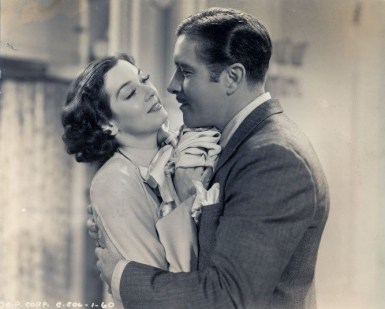
Varda chose to address gender expectations within relationships in Le Bonheur and Dorothy Arzner also choses to utilize relationships in order to make observations about cultural gender norms, but in Craig’s Wife (Dorothy Arzner, 1936) Arzner reverses the traditional power dynamic in the relationship between the film’s main character, Harriet, and her husband, Walter. Walter displays more stereotypically feminine traits; being more submissive and overly affectionate than Harriet, while Harriet is aloof and cold which are traits typically more valued in men. When Harriet returns home from a trip Walter is extremely excited to see her and he watches her unpack her things as he talks about how glad he is that she is back home. He also talks about how much he missed her while she was away, even though Harriet tries several times to get him to leave her alone. During this same scene Harriet tells Walter where he can and can’t sit and how to sit, as if he was a child, and he does what she says without ever questioning her or becoming angry or irritated. Harriet also doesn’t allow Walter to smoke in their home and even when she isn’t around he stops himself from lighting cigarettes. Additionally, although she never expresses any kind of love or affection for him and when he is around she is very dismissive of him, when Harriet doesn’t know where Walter is or what he is doing she becomes irritated and a bit frantic because she wants to control everything in her home including Walter and his actions, in order to uphold a façade of perfection and domestic bliss. When Harriet learns that her neighbor and her neighbor’s grandson are in her house she is obviously displeased and it is apparent that she doesn’t enjoy the company of her neighbor or of children very much, something seen as unnatural for women, but Walter is enchanted by the little boy and talks enthusiastically with him and Mrs. Frasier while Harriet looks on with disgust. Women in films are also often shown interacting with plants and nature, as frequently seen with Thérèse in Le Bonheur who picks flowers and enjoys spending time in the forest with her family, this is frequently intended to signify moral superiority thorough closeness with nature (think of Eve in the garden of Eden). Harriet Craig, however, fills her house with cold statues, big mirrors, and heavy drapes that omit all light from the rooms of her museum-like home and she instructs her maids to get rid of any flowers that are brought into the house lest the petals fall and make a mess on her floors.
It is not uncommon to encounter directors who use men and women in romantic (or non-romantic in the case of Craig’s Wife) relationships, to make a statement about gender roles or masculinity and femininity. However, unlike these directors, in her film The Hitch-hiker (Ida Lupino, 1953) Ida Lupino uses three men to show the effects of expectations put on men (especially American men) to appear and behave in a hyper masculine manner. In the article, “Ida Lupino’s American Psycho: The Hitch-Hiker” written by Davin Greven, the author mentions that iconic cinematic psychopaths of the past tend to be males with more effeminate characteristics, citing Norman Bates of Psycho (Alfred Hitchcock, 1960) and Mark Lewis, the antagonist of Michael Powell’s Peeping Tom (Michael Powell, 1960). In the Hitch-Hiker it seems as if the antagonist, serial killer Emmett Meyers, is aware of this stereotype and therefore feels the need to overcompensate and behave in an almost comically hyper-macho manner. He wears a black leather jacket, which is a stereotypically masculine piece of clothing worn by gang members and “bad boys” in countless stories. As shown in the movie Grease (Randal Kleiser, 1978) a leather jacket is also worn by women when they want to shed a bit of their femininity and be perceived as tough which is what is being done by Meyers. Meyers also always had a gun with him. Western cowboys contributed to the idea that guns are the perfect accessory to add an element of intimidation to any man, and again it seems that Meyers draws inspiration from ideas of masculinity and manliness portrayed in popular media as compared to the way men really behave. He uses guns to force Gil and Roy to do what he wants, including forcing them to play a dangerous and sadistic game where Gil shot cans as Roy stood all too near to the line of fire, but once Meyers loses his gun, his main source of his power seems to disappear, symbolizing his de-masculination and as a result, his “tough guy” persona completely disappears. And as he tries to flee apprehension by the authorities the audience sees him for what he really is, a coward.
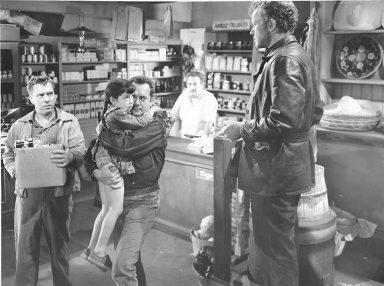
Meyers also tries to relate to Gil and Roy by giving a performance of what he perceives to be manly behavior. Gil is protective of the little girl in the Mexican grocery shop and he refuses to abandon Roy when he hurts his leg, showing multiple times that he cares about the safety of those around him including children and his friend, and never once is the audience led to question his “manhood” at all throughout the film. Yet, Meyers mocks the two men for sticking together, saying that if they hadn’t been looking out for each other they could have escaped from him, this insinuation that masculine men should care about themselves over others just shows that Meyers has no understanding of the way real men behave. To emphasize this point, Lupino includes many instances in which Meyers can be interpreted as trying to befriend the men. He offers Gil and Roy cigarettes and offers to buy them beers and when they reject his offers he appears almost as if his feelings have been hurt. Meyers even goes so far as to switch clothes with Roy in hopes that dressing in the clothing of a traditionally unquestionably masculine man, will give him the look of a “guy’s guy” and Gil and Roy will be more willing to accept him.
The stereotypical gender roles that are accepted by the majority of society, leave little room for women to be anything other than subservient domestic housewives or damsels in distress, and for men to be anything other than generally emotionally void, ultra-macho dominant figures. Men directors in Hollywood have time and time again provided audiences with narrow portrayals of domestic gender roles and those within relationships, masculinity, and femininity. But, women filmmakers like Ida Lupino, Agnès Varda and Dorothy Arzner created films with the potential to make audience members uncomfortable through their disruption of society’s traditional expectations of gender. By portraying friendships between men, relationships with reversed gender roles, and even toxically traditional relationships through the gaze of a woman, these directors implore audience members to think beyond their preconceived ideas and consider the implications and effects of these stereotypes on ourselves and those around us.
image source: https://www.closeupfilmcentre.com/film_programmes/2018/agnes-varda/le-bonheur/, https://www.imdb.com/title/tt0058985/mediaindex?page=1&ref_=ttmi_mi_sm, https://www.imdb.com/title/tt0027474/mediaindex?ref_=tt_pv_mi_sm, https://www.imdb.com/title/tt0045877/mediaindex?ref_=tt_pv_mi_sm
 Did you see that? Did you hear that?
Leave a comment