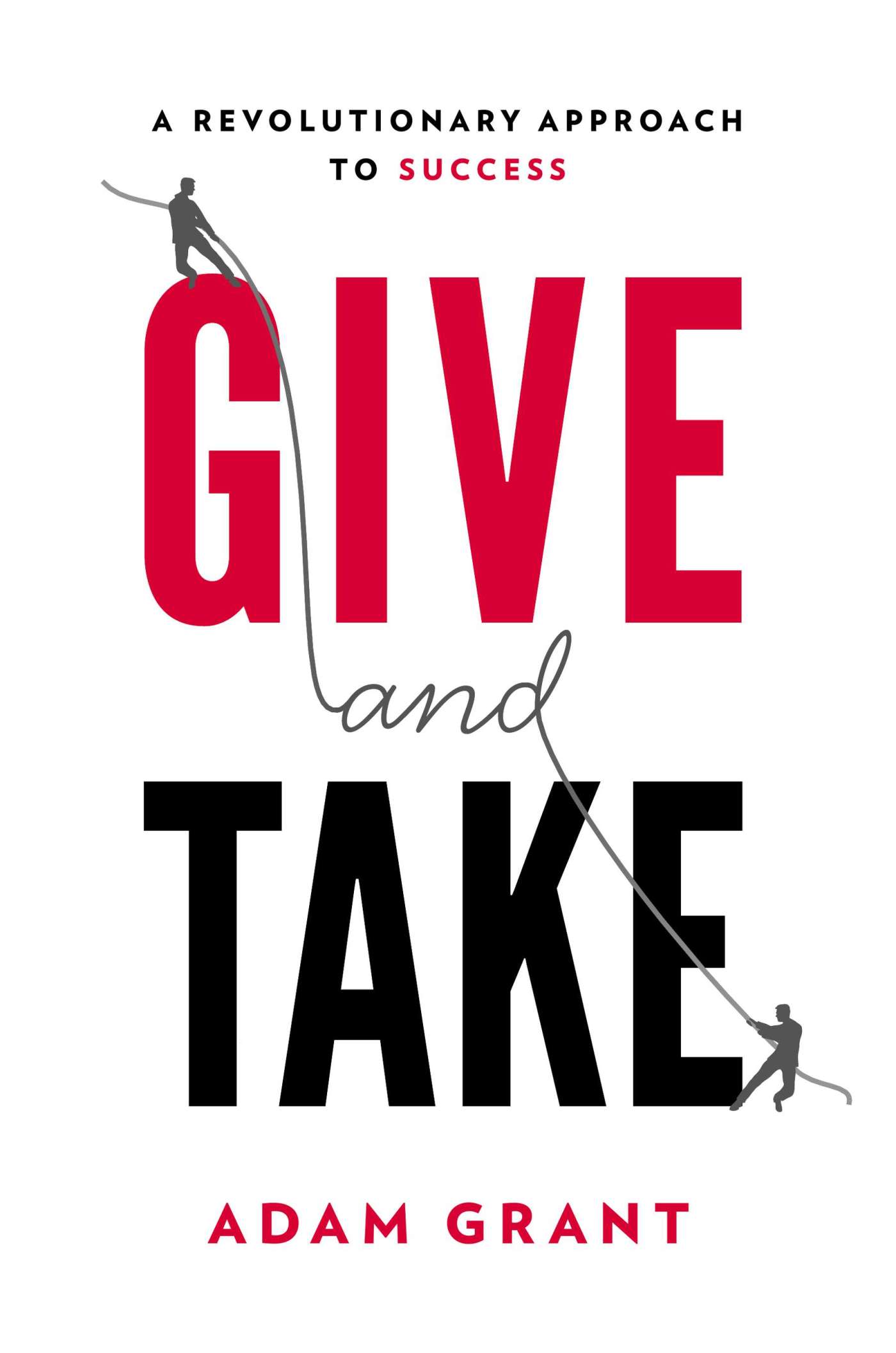
Adam Grant’s book, Give and Take is an interesting angle of looking at personality classifications. As compared to classifications like the Gallup strengths assessment or even the big 5 personality test, Grant keeps it quite simple with his assertion that every person in the workplace falls into one of three categories; givers, takers, and matchers.
Givers are the people that we all believe we are (or at least are the kind of people society has trained us to believe that we should be), they help other people without hesitation and don’t want or expect anything in return. Givers simply give because it is what they want to do (Tell me this kind of goody goody “kiss-assery” doesn’t make you want to roll your eyes. You can’t can you?). Grant describes givers as “other-focused” meaning they pay more attention to what other people need from them than what they themselves need.
Takers, as you may have devised, are the exact opposite of givers. To put it simply, the taker national slogan is: Ask not what you can do for your country, but what your country can do for you (Is this not the original quote?). In Grant’s own words, “[takers] like to get more than they give. They tilt reciprocity in their own favor, putting their own interests ahead of others’ needs. They feel that to succeed they need to do better than others” (Grant, 4). Sound like a cutthroat corporate villain? Tell me about it. However, Grant does add that while takers do seem quite brutal, they are just cautious and “self-protective” with the understandable mentality that if they don’t put themselves first, no one will.
While this symbolic hero-villain narrative is quite salacious, and I’m sure you feel like the behaviors of every boss or coworker you’ve ever had has just been explained to you, pump the breaks. There is one more type of person; the matcher. This one seems interesting right, wrong. In fact, most of us fall into the matcher category, at least when it comes down to our professional personalities. Matchers play a very fair game. They tend to try to keep an equal balance of giving and getting; a “you scratch my back and I’ll scratch yours” kind of situation.
While things would be much more interesting if every person had a set role that they played without wavering (this would make a great workplace drama series), people tend to move between the categories depending on the situation. Perhaps someone is a taker when it comes to salary negotiation, a giver when a young new colleague asks for advice, and a matcher when working with others on a project.
After reading and thinking about Give and Take, I like most people have come to the conclusion that I’m a jerk. Just kidding, I’m a matcher with jerk-like tendencies. I like to help other people with things, and while I don’t necessarily expect things in return or really subscribe to the “eye for an eye” mentality, especially in group projects I can sometimes have a “once my part is done, my job is done” point of view. This is mostly because when it comes to grades or jobs or just getting work done in general, you’ve got to look out for number one (You. Number one is you). I’m not going to sacrifice my grade or my professional reputation for someone else, and if I feel like someone isn’t pulling their weight on the climb up the mountain, sorry but I’m gonna have to cut you lose. I believe very strongly (in group settings at least) that if you are trying hard to do your job, there is no reason I can’t stop and help you out, and I genuinely won’t expect anything in return. But if a person is noticeably trying to coast off of the work of other people, you’re on your own. Maybe it’s harsh, but I’m an extremely ambitious person, so I’m not okay with my own performance falling because of the actions of other people.
Adam Grant’s Give and Take is pretty insightful and it makes you think a lot about yourself, but if you’re like me and self-help type books aren’t your cup of tea (perhaps somewhere Malcolm Gladwell is cursing my name), here is Grant’s TED talk on the same subject. Do give the book a read (or the video a watch, to each his own) and take some time to reflect on your own workplace actions and mentality.
 Did you see that? Did you hear that?
Leave a comment