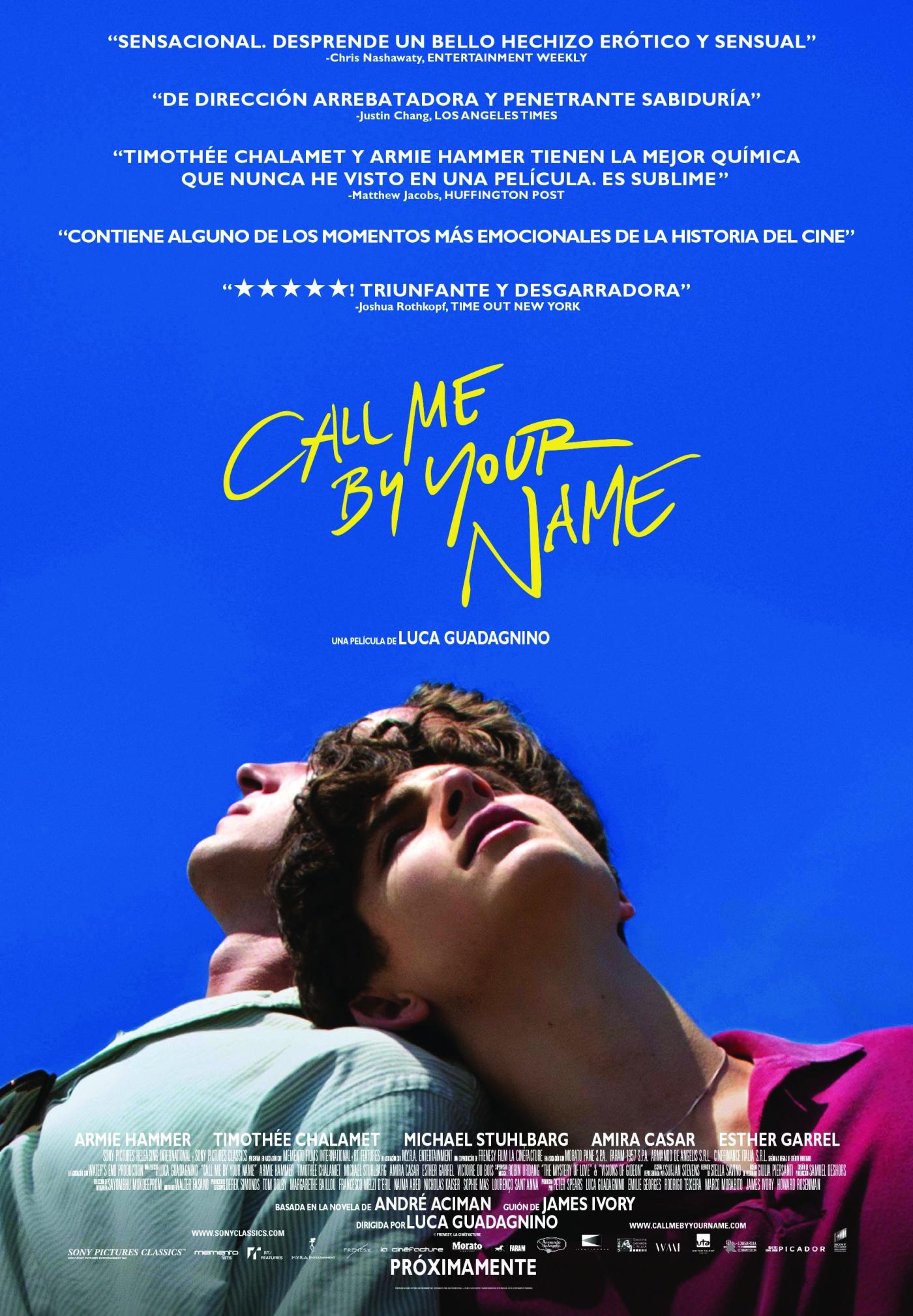
Call Me By Your Name
Call Me by Your Name was released in 2017 and stars Timothée Chalamet in the leading role of Elio and Armie Hammer as Oliver. The film, directed by Luca Guadagnino is set in a small Italian village one summer during the early 1980s and revolves around the development of seventeen-year-old Elio as he grapples with his affections for his father’s twenty-four-year-old graduate assistant, Oliver. The camera work is simple but effective and it seems like no artificial light even exists in the world of the film, the shots are bright, clean, and pure in a way that can only be achieved with natural lighting. The melancholy but hypnotic score of the film blends beautifully with the other aforementioned elements to give the film an idyllic, dreamlike quality.
Reader beware, Spoilers ahead! Continue at your own risk
It is interesting to note the ease and nonchalance with which Elio navigates his relationships with both Oliver and Marzia, a girl Elio also pursues during the film. The relationship between Elio and Oliver is kept secret, but even so, Elio is never asked by anyone (himself included) to assign himself a label or to define his own sexuality. A large portion of the charm of Call Me by Your Name is due to the summery atmosphere in which the film is set. It is this same summery charm, one that lacks the seriousness of commitment, that assures Elio that he doesn’t have to define himself and makes the audience forget that this is a question to which they may have wanted a concrete answer.
Call Me by Your Name seems almost to exist in an alternate universe, eerily similar to our own. There are literary and other cultural references that suggest the film does in fact take place on the earth we all know and love (though the 80s were strange enough to feel like some kind of alt universe) and yet it all seems too good to be true. Elio and Oliver’s relationship begins without either man really ever verbalizing anything, they have an oddly cryptic conversation, go swimming in a secluded like, and just like that their romance begins. There is no judgment from either of Elio’s parents, who are later revealed to have known about the relationship despite the efforts to keep it a secret. They kiss in shadowy corners of Italian streets in the middle of the day and no one ever sees them. They even roam the quiet nighttime streets of France kissing against walls and walking in the middle of the streets holding hands and (in very 80s fashion) they end the night dancing with strangers to music that is played loudly from the stereo of someone’s parked car. When inevitably the end of the summer arrives, and Oliver must leave, Elio is heartbroken, but the situation doesn’t seem tragic. It is just another event that takes place in their narrative, don’t misunderstand me it is sad, but it is also something that was fated to happen from the very beginning. It isn’t shocking, it isn’t an unexpected twist, it is simply life and it signals to the viewer and to Elio that the mystical summer has come to a close. We have returned to reality.
I greatly admire the way in which the lack of conflict and backlash within this story is unprecedented when it comes to LGBT+ programming. It is made extremely clear to audience members that Call Me by Your Name is a film about desire, it does not aim to make political statements (though some may argue its very existence is statement enough), the film’s goal is simply to exist as a romance movie.
I will admit that “coming of age” may be my favorite genre of films so some may say I was primed to enjoy Call Me by Your Name. The film was quieter than I expected and was composed of beautiful picturesque shots that were made even more striking by the addition of the songs “Mystery of Love” and “Visions of Gideon” by Sufjan Stevens.
TL;DR: I absolutely adored Call Me by Your Name. It is romantic, carefree, and beautiful and it resonates long after the credits finish rolling. Timothée Chalamet and Armie Hammer both give such spectacular understated performances that at times it feels less like a film and more like a window into the lives of impossibly enchanting people. The story takes its time to unfold, so action seekers may not be contented with the film’s slower pace, but I highly recommend this film to viewers who have been yearning for a gorgeous and inclusive romantic work to make its way to the cinematic realm, and to viewers who aren’t afraid to commit to the 132 minute runtime in order to consume a charmingly timeless and engrossing story about desire and love.
 Did you see that? Did you hear that?
I love your take on “Call Me By Your Name!” It is cool that you think that the story might take place on an alternate universe so to say. I get that feelings from realistic historical movies a lot of the time too (because they feel so foreign). I also like how you mention how light is used in this movie, I never realize those kinds of aspects in movies. They are very important though and defiantly help set up how the movie is viewed and the tone of it.
LikeLike